




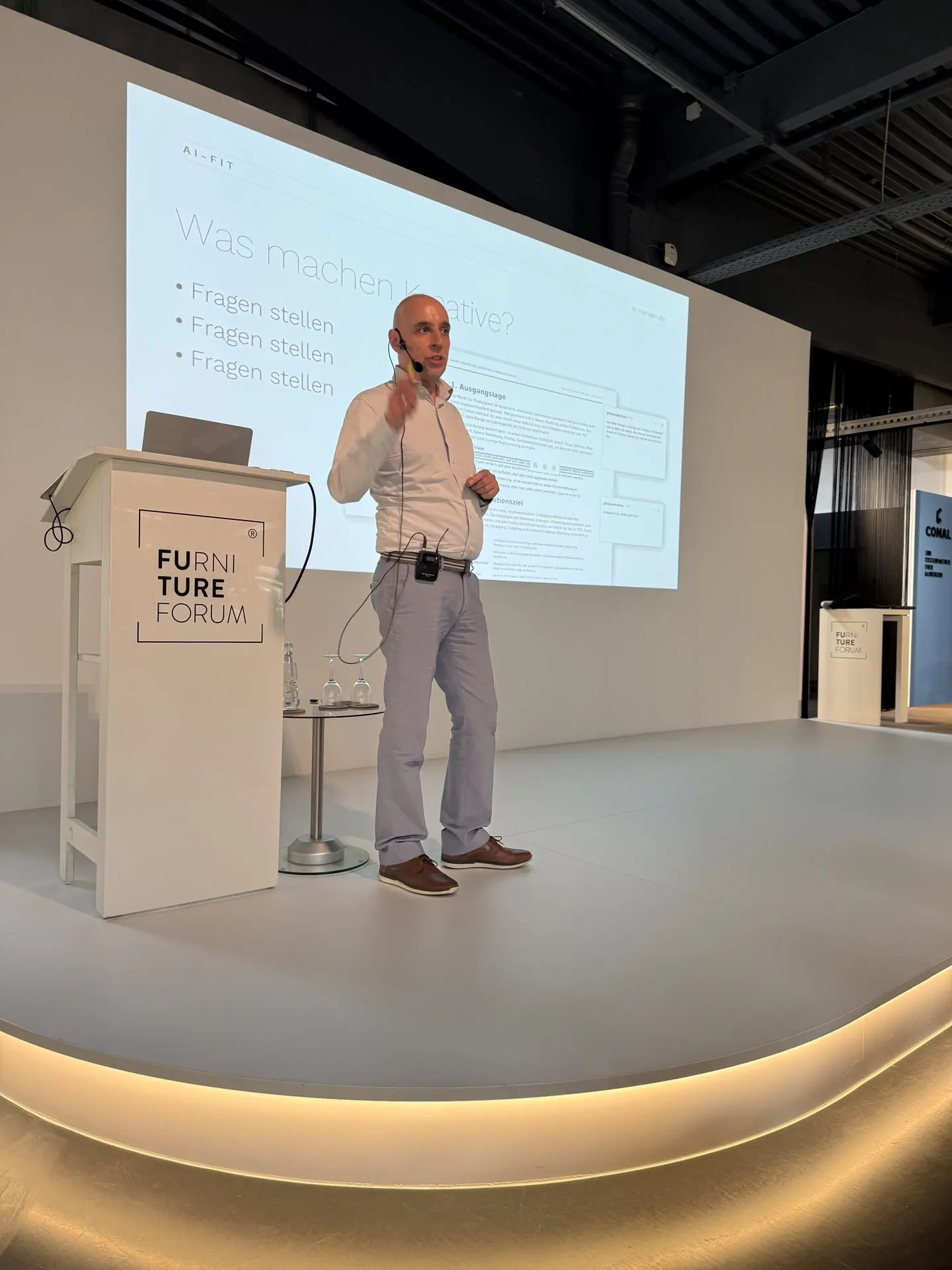
His topic: AI transformation begins not with technology, but with people.
Johannes Hofmann: AI transformation begins not with technology, but with people
The opening was delivered by Johannes Hofmann, Art Director and consultant from jh artwork in Hamburg. Under the title “AI FIT: In five steps to successful AI transformation”, he demonstrated how companies can successfully shape the entry into the transformation with Artificial Intelligence. His approach: AI is not purely a technological challenge, but primarily an organizational and cultural one.
The human remains the decisive success factor
Hofmann identified the entry into transformation as the greatest challenge. For AI projects to succeed, investment must be made holistically across the organisation. According to an analysis by Boston Consulting Group, only around 20 per cent of investments are made in technological infrastructure and only about ten per cent in suitable AI models. Around 70 per cent of the required resources must, however, be invested in people, processes, and cultural change.
“Employees should not be passengers, but sitting in the driver’s seat,” Hofmann summarized. If the workforce is not taken along, the greatest risk factor of all looms: the rejection of future-relevant technologies within the company.
Five steps to successful transformation
How these potentials can be harnessed, Hofmann explained using a five-stage transformation model:
- Observe – Document and understand processes in detail.
- Question – Analyse and critically scrutinise routines.
- Fantasize – Rethink processes and develop creative future scenarios.
- Inform – Identify suitable tools, technologies, and service providers.
- Transform – Begin the implementation decisively.
The potential of this approach was demonstrated by Hofmann using a practical example from the kitchen industry. For one manufacturer, a completely digital usage environment was developed that significantly simplifies content creation. Compared to classical physical productions, time, cost, and resource expenditure can be reduced by up to 70 per cent.
“AI is a management responsibility”
To conclude, Hofmann made it clear that AI is not a task for individual specialist departments. “AI is a management responsibility,” he emphasised.
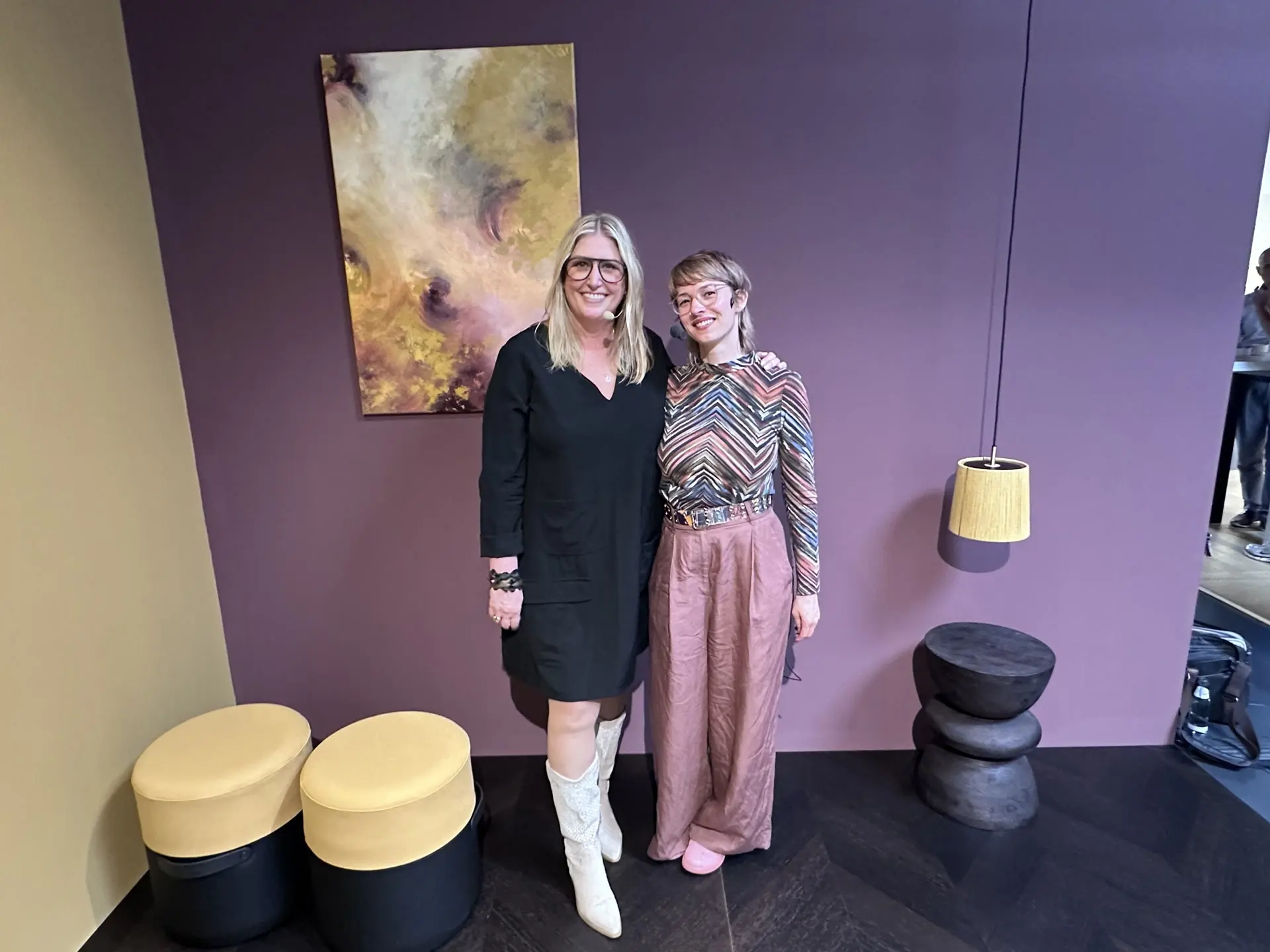
Alina Schartner: Between Midimalism, Emotional Design and new sensuality
Following this, Alina Schartner provided a comprehensive trend update from Milan Design Week, taking participants on an equally analytical and atmospheric tour through the different design districts of the northern Italian metropolis. As a design consultant and trend forecaster, she observes and analyses design developments and places them in larger contexts.
Trend research distinguishes between microtrends with a lifespan of one to two years, macrotrends with a time horizon of five to ten years, and megatrends that shape society and markets over several decades. For companies, it is crucial to decide consciously which trends they want to follow – and which they do not.
“Some trends return as surely as ‘amen’ in church,” Schartner explained. Especially in economically difficult times, certain motifs return regularly. Floral decorations, stripes, dots, and themes surrounding food and drink are classic crisis patterns of the design and consumer world.
The three major design movements
Schartner identified three major movements as the currently prevailing style directions: Minimalism, Midimalism, and Maximalism. While Minimalism and Maximalism mark the well-known poles between reduction and eccentricity, Schartner understands Midimalism as a connection between both worlds. Here, restraint and opulence are deliberately combined.
Across all style directions, however, she identified a common leitmotif: design should become more emotional again. The focus is on real connections, communication, and human proximity. This is evident in organic shapes, soft lines, and an overall more sensual understanding of design.
Increasingly, multisensory approaches are also playing a role. Scents are used deliberately to charge rooms emotionally and make brands tangible. At the same time, ornaments, playful patterns, and decorative elements are gaining importance again.
To conclude her presentation, Schartner emphasised the special importance of Milan for the international design scene: “Despite all the challenges and downsides, there is no comparable place where the international design world meets, exchanges, and discusses with such intensity. Milan is and remains the world capital of design.”
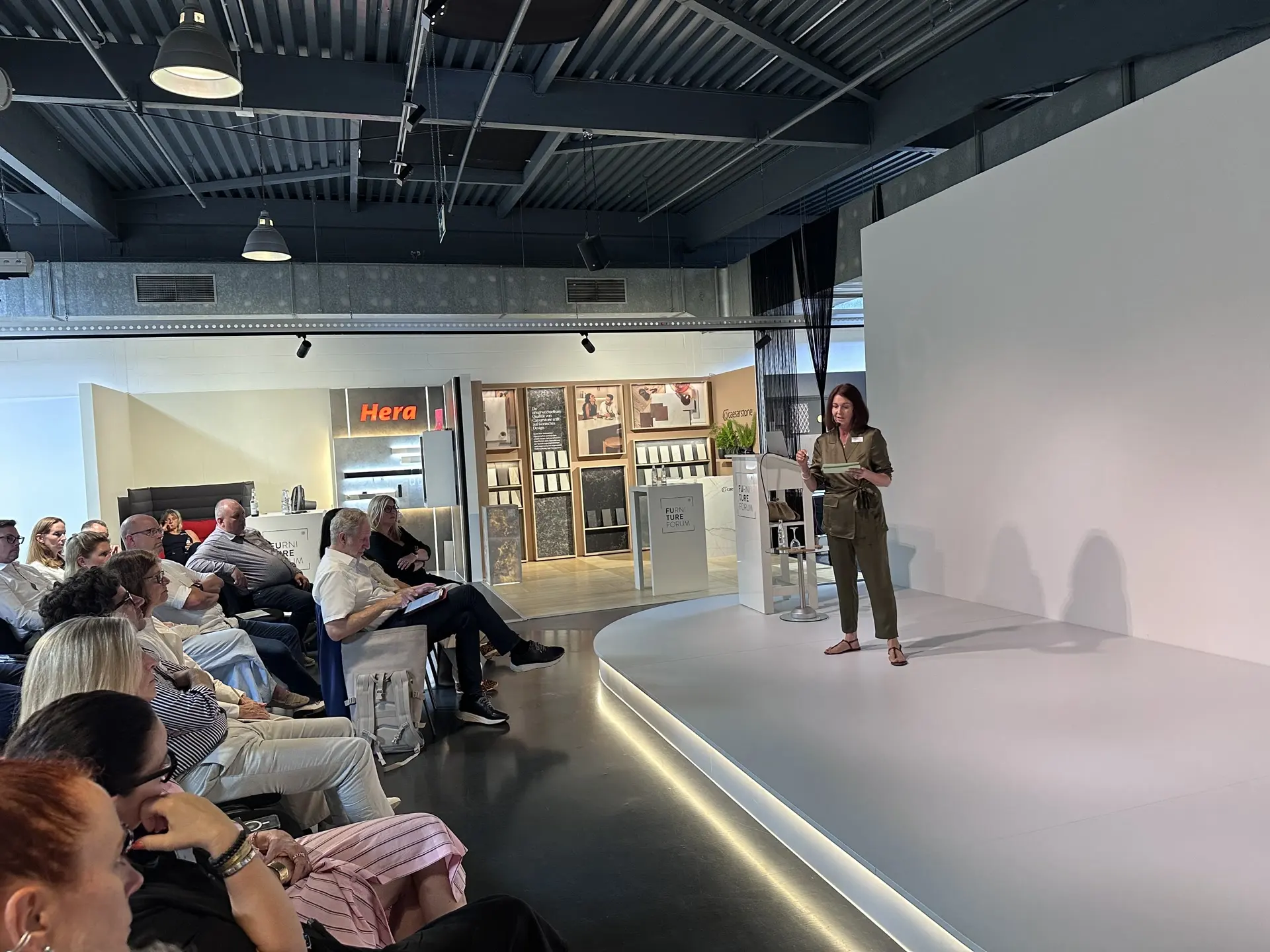
“Price wars, displacement, stagnation – what the furniture industry can learn from the fashion industry”
Angelika Schindler-Obenhaus: “Price wars always mean that value has been lost previously”
The impressive conclusion to the Trendreport was set by Angelika Schindler-Obenhaus. Under the title “Price wars, displacement, stagnation – what can the furniture industry learn from the fashion industry?”, the long-standing retail expert analysed structural developments she has experienced from various perspectives over more than four decades of professional experience – from retail and department stores to associations and brand organisations. Without presentation slides, but with great clarity and palpable passion, she held up a mirror to the furniture industry at the FURNITURE FUTURE FORUM. The audience followed her explanations with great attention.
When the speed of change outside an industry becomes faster than within the industry itself, it becomes critical, Schindler-Obenhaus explained. Then begins a process of copying, replicating, and securing. What initially feels reasonable and low-risk is, in truth, often nothing more than the administration of stagnation. When relevance is lost, only price remains as a differentiator.
When relevance is lost, only price remains as a differentiator
This pattern can be observed particularly in brands. When they lose relevance, price often remains the only means of differentiation. The consequence is price wars, shrinking margins, and permanent price pressure. “Price wars always mean that value has been lost elsewhere,” said Schindler-Obenhaus.
From future builder to past administrator
In parallel, procurement has become increasingly data-driven. Category management, key figures, and analyses have gained importance, while intuition, trend feeling, and personal customer contact have receded into the background. “As a result, buyers have increasingly become pure condition managers. The entire paradigm of the industry has shifted,” said Schindler-Obenhaus.
From partnership to competition
With the rise of e-commerce, the balance of power has changed once again. Brands have begun to engage in direct marketing and are in direct competition with specialist retailers. The latter has reacted with a private label offensive and has frequently copied successful manufacturer brands. “Partnership became competition. Win-win relationships became cannibalisation.”
The sales floor is a stage – not a warehouse
Successful companies would have to find a way between return on investment and trends. The sales floor is much more than a place for presenting goods. “The sales floor is the most important space of all. It is a stage, not a warehouse.”
Conclusion: A deficit of emotion
To conclude the “Trendreport”, host Katrin de Louw drew an overarching conclusion from the day’s events. “After these presentations, we diagnose more than ever a deficit of emotion – in retail, in design, and along the entire value chain.” She noted that this deficit is becoming increasingly visible, which is also a consequence of increasing digitalisation and the omnipresent presence of Artificial Intelligence.
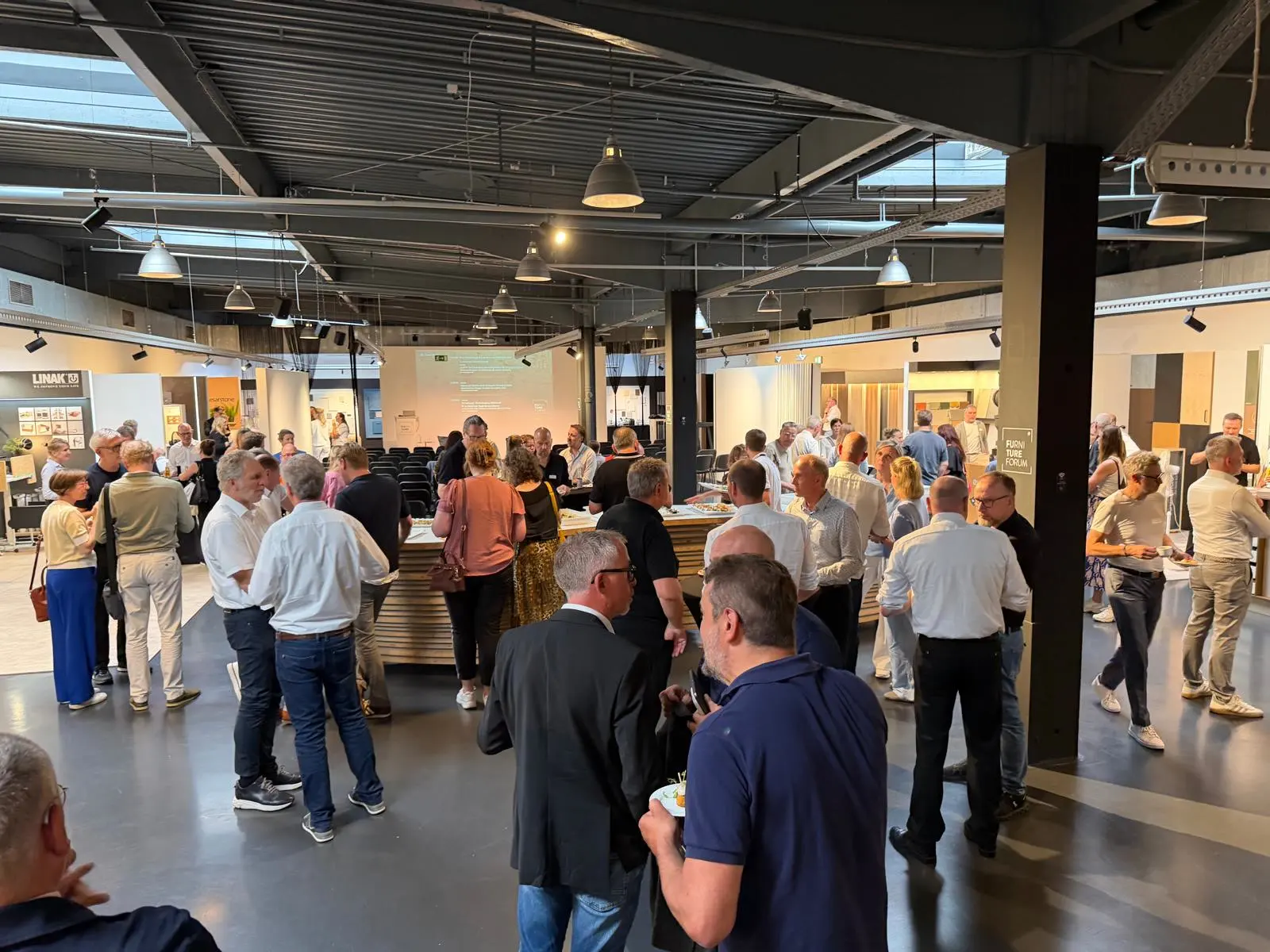
FURNITURE FUTURE FORUM remains an impulse provider for the industry
With the “Trendreport 2026”, the FURNITURE FUTURE FORUM has once again confirmed its ambition to look beyond the industry’s horizons and provide orientation in a time of profound change – and it has been doing so for almost 20 years. The central finding of the day: the future is not created solely through technology, processes, or products, but above all through the ability to create emotions, relevance, and real connections between people.
The next opportunity is already available on 12 November 2026. Then, the FURNITURE FUTURE FORUM will invite you to “MÖBELVISIONEN 2027”. The agenda will once again feature forward-looking developments for the furniture and interior industry. In addition, the “Sustained Colour No. 10” will be presented for the first time – the new trend colour of the COLORNETWORK, which serves as an impulse generator for design, product development, and brand communication for the coming years.
Text: Excerpt PM | Sascha Tapken